The 6 Best Mixing Books for 2026
Books offer what YouTube cannot: structured, deep knowledge without distractions or algorithms. The best mixing books teach you to think like an engineer, not just follow presets. Here are the books that have shaped generations of mix engineers, ranked by impact and accessibility.
How We Chose
- Written by experienced, credentialed mixing or audio professionals
- Teaches transferable concepts, not just DAW-specific techniques
- Well-organized progression from fundamentals to advanced topics
- Practical exercises or real-world examples that reinforce learning
Quick Picks
Skip the theory overload - start with the two we wrote
By Kristijan Sinković, SSL-certified engineer, M.Mus (Zagreb) and owner of M Street Music, 14 years mixing. Written for producers in real home studios, not lecture halls.
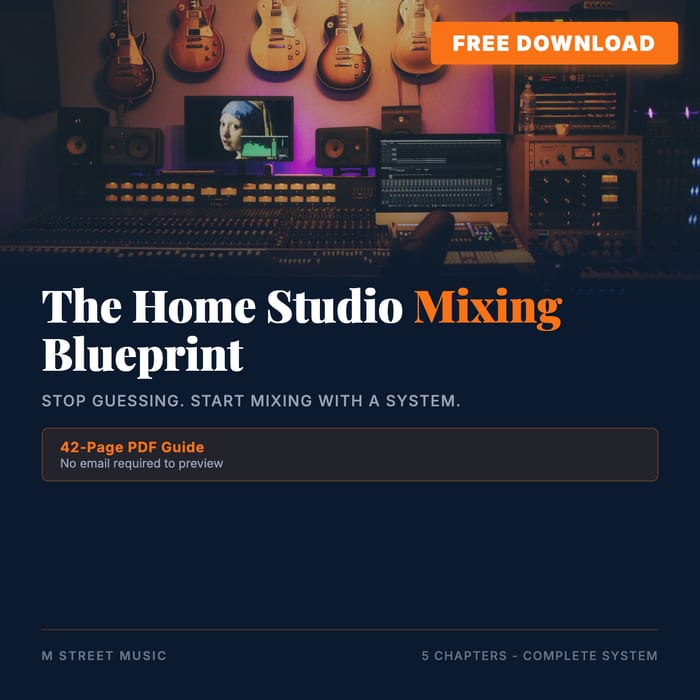
The Home Studio Mixing Blueprint
The complete recording-to-master workflow. Signal chain, EQ, compression, reverb, and exact streaming LUFS targets.
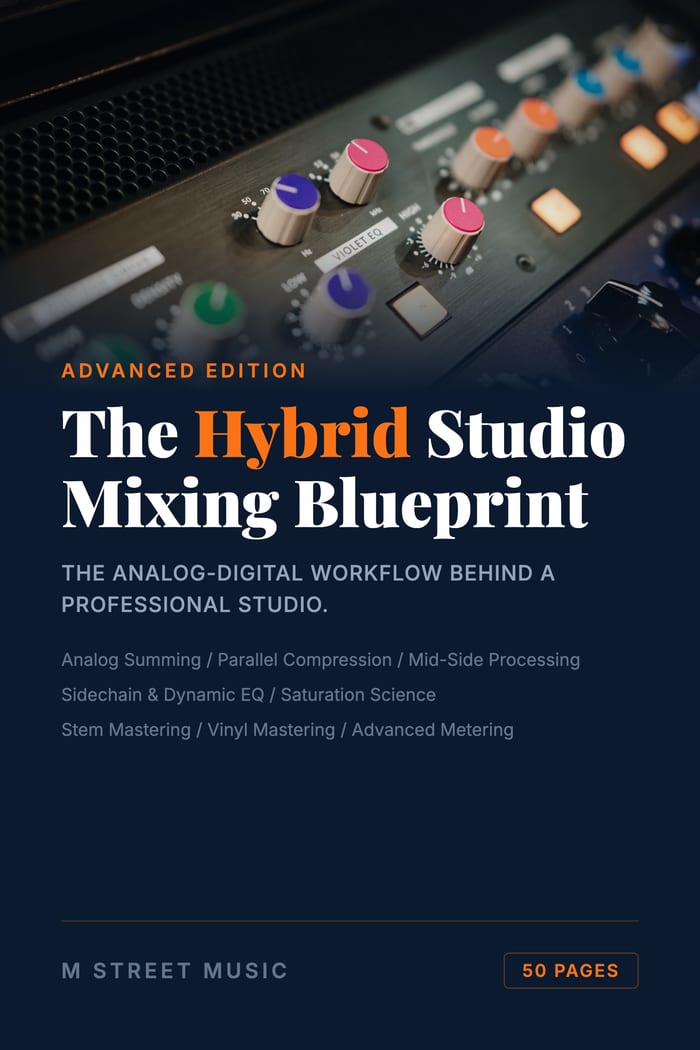
The Hybrid Studio Mixing Blueprint
The analog-digital workflow behind pro masters: analog summing, parallel compression, mid/side, saturation, vinyl mastering.
Detailed Reviews
Mixing Secrets for the Small Studio by Mike Senior
The most practical and comprehensive mixing book written specifically for home studio producers. Mike Senior covers everything from monitoring setup to advanced automation, with real-world examples and exercises. The book assumes you are working in an imperfect room with budget gear — exactly where most readers are.
Pros
- Written specifically for home studios with realistic advice about imperfect rooms
- Covers the complete mixing process from start to finish with practical exercises
- Clear writing style with excellent diagrams and audio examples available online
Cons
- -Very thorough — at 600+ pages, it requires commitment to finish
- -Some sections on specific techniques may need updating as technology evolves
Best for: Any home studio producer who wants a complete, practical education in mixing.
The Mixing Engineer's Handbook by Bobby Owsinski
Now in its fifth edition, this book combines Bobby Owsinski's mixing knowledge with interviews from dozens of legendary engineers. It covers fundamental techniques, genre-specific approaches, and practical workflows used in professional studios worldwide.
Pros
- Interviews with world-class engineers provide multiple perspectives on mixing
- Covers mixing for every genre from rock to orchestral
- Regularly updated editions keep the content current
Cons
- -Interview format means some sections lack the depth of a dedicated teaching book
- -More reference-oriented than tutorial-oriented
Best for: Intermediate mixers who want to understand how top professionals approach their craft.
The Art of Mixing by David Gibson
A unique and influential book that teaches mixing through visual metaphors. Gibson maps the mix to a 3D space where volume is height, panning is left-right, and reverb/EQ is front-back depth. This visual framework helps beginners develop their mixing intuition faster.
Pros
- Revolutionary visual approach to understanding the mix as a 3D space
- Makes abstract mixing concepts concrete and intuitive
- Short and focused — you can finish it in a weekend
Cons
- -Light on specific technical details like EQ frequencies or compression settings
- -The visual metaphor, while helpful, is simplified and has limitations
Best for: Visual learners and beginners who struggle to conceptualize how a mix works.
Zen and the Art of Mixing by Mixerman
Mixerman (Eric Sarafin) takes a philosophical approach to mixing, arguing that technique without taste is meaningless. The book covers mixing concepts through the lens of musical intent, emotional impact, and creative decision-making rather than technical procedures.
Pros
- Teaches the mindset and philosophy of great mixing, not just button-pressing
- Entertaining, opinionated writing style keeps you engaged
- Challenges you to think about why you make mixing choices
Cons
- -Highly opinionated — some advice is presented as universal truth when it is subjective
- -Less practical and technical than other books on this list
Best for: Intermediate mixers who have the technical skills but lack artistic direction.
Behind the Glass (Volumes 1 & 2) by Howard Massey
An extensive collection of interviews with the greatest producers and engineers in recording history, including George Martin, Bruce Swedien, Al Schmitt, and Tony Visconti. While focused on recording, the mixing insights from these legends are invaluable.
Pros
- First-person accounts from the engineers behind the most iconic records ever made
- Covers both the technical and creative philosophies of each engineer
- Two volumes provide over 60 in-depth interviews
Cons
- -Recording-focused — mixing is discussed but is not the primary topic
- -Some interviews reference vintage gear and techniques that are less relevant today
Best for: Anyone who wants to understand the history and philosophy of great recorded sound.
Audio Engineering 101 by Tim Dittmar
A true beginner's guide that covers the fundamental science of audio before getting into mixing. Dittmar explains acoustics, microphones, signal flow, digital audio, and basic mixing concepts in plain language with clear diagrams.
Pros
- Starts from absolute zero — no prior knowledge required
- Covers the audio fundamentals that many mixers never properly learn
- Clear, textbook-style writing with review questions
Cons
- -Too basic for anyone with intermediate mixing experience
- -Covers a wide range of audio topics, so mixing is only one section
Best for: Complete beginners who need to understand the science of audio before learning to mix.
How to Choose
Start with Mixing Secrets for the Small Studio if you want practical skills. Grab The Art of Mixing if you need help conceptualizing. Read The Mixing Engineer's Handbook when you want to learn from the best.
the quick answers.
Are mixing books still relevant in the age of YouTube?+
Should I read about mixing or just practice mixing?+
Which book should I start with if I am a complete beginner?+
Are there any mixing books that come with audio examples?+
Got Your Gear? Test Your Mix
Upload your track and see how your mix sounds to fresh ears. Free, instant analysis.
upload your mixfree tier available, no credit card required